Surveying the Espresso Ecosystem
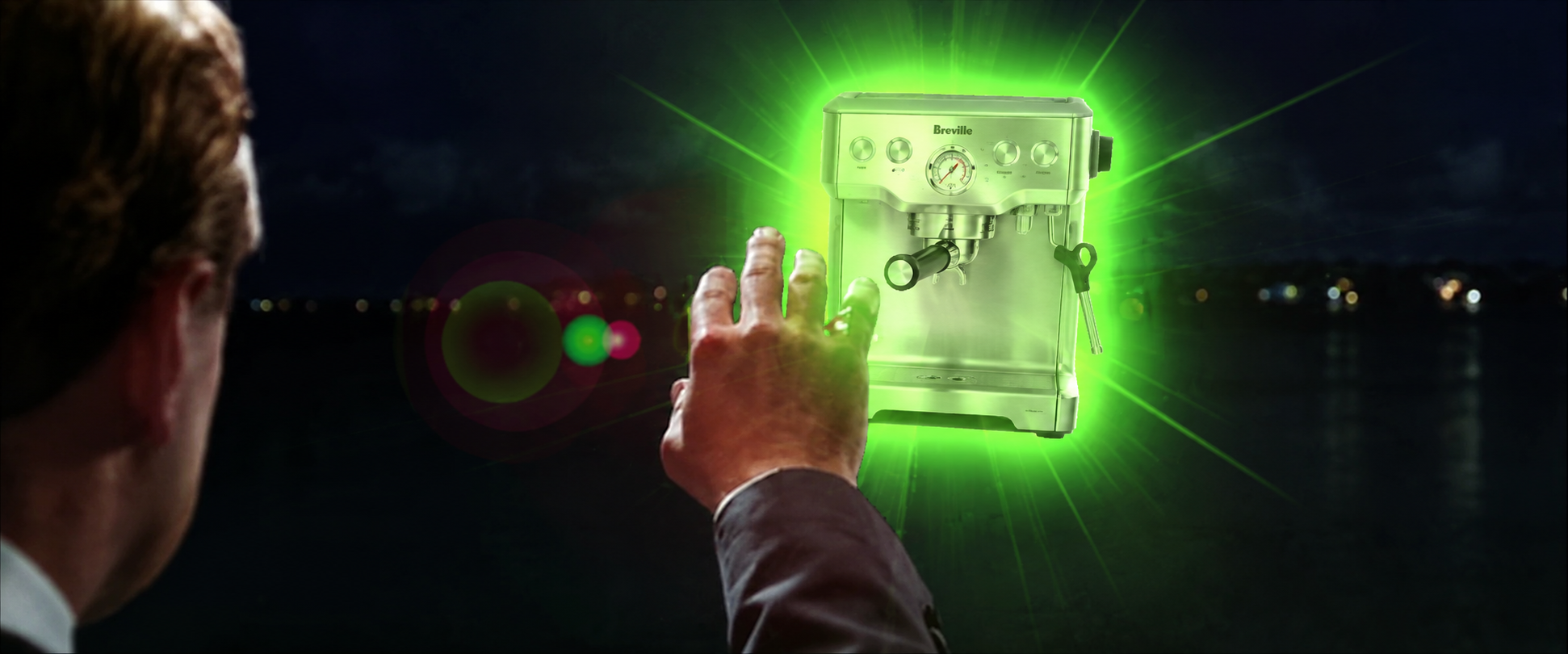
Finally, the time had come for me to buy a home espresso machine. But which one? For many years, I had idolized Brevilles as these top of the line creatures, thinking that perhaps one day, when I had “made it,” one of these steel clad marvels would be mine. Well, that time was now. My own personal green light was within reach, and it was shiny and caffeine-producing.
However, as I did my preliminary market research, I found that the Breville lineup was not especially well regarded by the dedicated “coffee enthusiast” spaces. There were Strong Opinions about what you “should” get, and while opinions varied as to what that should be, one thing that many could agree upon was that it should be absolutely Not A Breville. I came across a good number of impassioned treatises on the topic, such as this one:
They’re disposable junk. Roughly every 8th post here is a problem with a Breville/Sage. Part of that is how ubiquitous they are, but they are absolutely problem-prone, and built to last just long enough to clear the warranty. Sure, some people manage to get some distance out of them, but they aren’t made to be user serviceable, they’re made to be replaced. The reason they have a strong feature set for not much money is that they’re built in China for a pittance at exactly the quality level you’d expect for something that has all of the features of something that usually costs double.
They are cheap to acquire, but expensive to own. Even a modest Gaggia can last many decades, without even mentioning the real deal units that cost in excess of 1000 dollars – those are one-time purchases for life. This doesn’t mean they’re incapable of making decent, and occasionally good beverages. Anyone who says that is lying. They will make espresso, and that espresso will be enjoyable. But you are absolutely getting what you pay for with Breville. They’re cheap in both meanings, and every one of them is future e-waste. At minimum the ones with built-in grinders are the worst offenders. The onboard grinders make up at least half of the problems with those units, and there is no upgrade path, other than to have a massive half-broken bulky unit next to a separate grinder that works.
One thing I absolutely agreed with the average coffee maximalist about was that the grinder and the espresso maker should be separate machines. I reflexively disliked the idea of such a tightly coupled coffee-service architecture.
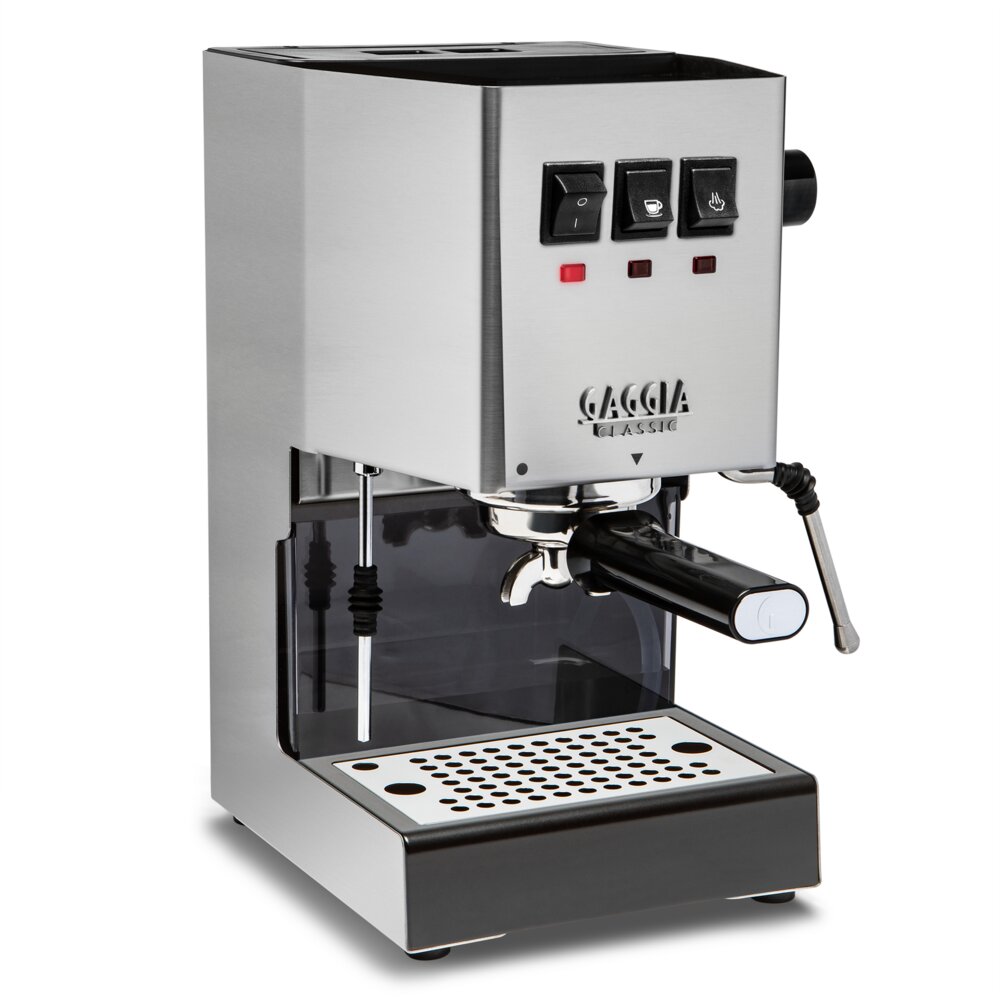
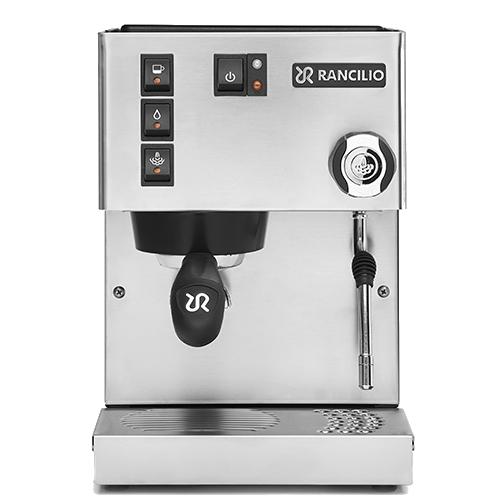
Some popular “coffee people” approved alternatives included the Gaggia Classic Pro ($450) and the Rancilio Silvia ($865). These were certainly very fine machines. However, I began to pre-emptively dread the seemingly infinite amount of tweaking they demanded as tribute. I didn’t want a “Creality Espresso 3” machine that I needed to mod to within an inch of its life upon arrival, or have to concern myself with “timing the start of the extraction to a specific point in the boiler’s heating cycle.” (They called this particular technique temperature surfing.)
This was a strange and nearly unthinkable situation to find myself in. Me, of all people, flinching away from (rather than towards!) the more moddable, extensible machines…but ultimately, I wanted something that “just worked” well enough on the default settings. I was only aiming to make a “basically ok” espresso to either drink directly or throw in a latte. Milk hides many crimes, as they say. What the purists insisted was true entry level was likely correct if you were a coffee-as-a-hobby person…but I suspected I lacked some of the sensory apparatus required to appreciate some of the finest nuances. I ultimately came to the conclusion that for me, hobbies are for after coffee, not before coffee.
Being more normie-class machines, the Brevilles offered minimal customizability, but also a mostly-automated onboarding path for the aspiring home espressoist. Their sheer ubiquity meant that there would be reliable demand for replacement parts, even if the supply chain was not guaranteed. If I could get 5–10 years out of a Breville, I decided I could live with that. Ultimately, it needed to not be so much of a hassle that I never used it, or what would be the point?
Brief excursion into alternatives concluded, I returned to evaluating the Brevilles, this time in specifics rather than generalities.
Back to the Brevilles
The entry-to-mid level Breville lineup looked like:
| Model | Model # | Price |
|---|---|---|
| Breville Bambino | BES450 | $300 |
| Breville Bambino Plus | BES500 | $500 |
| Breville Infuser | BES840 | $550–600 |
| Breville Barista Express | BES870 | $700 |
The machines above the $600 price point typically had a touch screen and/or a built-in grinder, which were non-starters for me. The next machine after the Infuser to be touchscreen-and-grinder-free was the highly regarded $1,600 (!) Breville Dual Boiler (BDB), which even the biggest Breville-haters typically made a grudging exception for. However, I was fine with a single boiler and I wasn’t willing to pay an extra $1,050 for a second one. (Technically, the Infuser didn’t use a boiler at all, but rather a thermocoil heating system…but that’s a different rabbit hole.)
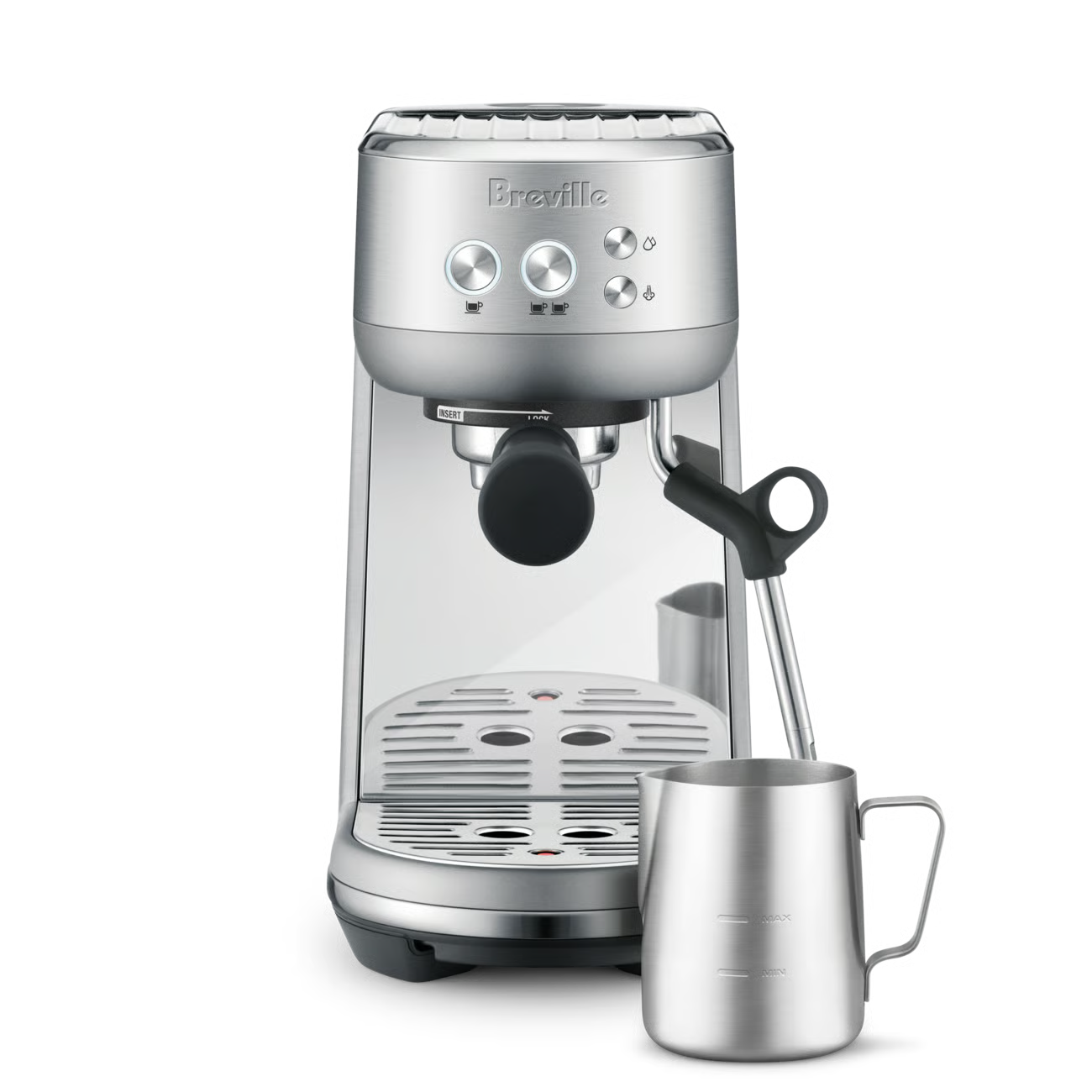
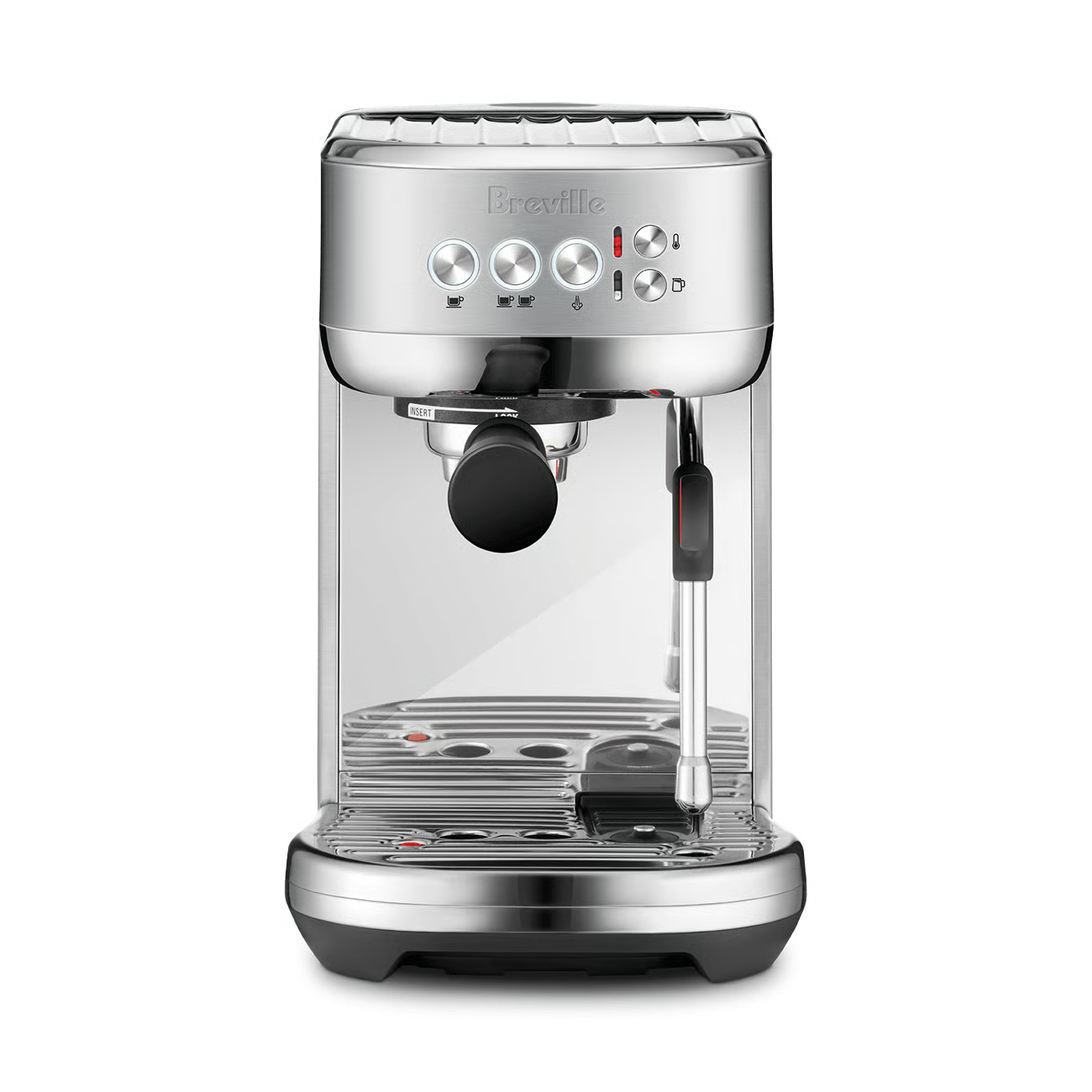
The Bambinos were very small and cute. However, I’ve learned to be wary about buying the absolute floor of a product line; you often find that corners were cut in highly annoying yet not-immediately-obvious ways. (It’s also never a good sign when a model is specifically exempted from the repair list.) Beyond that, the Bambinos had limited steam wand mobility (only forward and backward), had no pressure gauge (the most basic feedback mechanism for shot quality - totally absent!), and required preheating the empty portafilter basket by pulling a few hot water shots through it before attempting the real one. The water tank was also extremely tiny and the floor model felt unnervingly toy-like. The plus model had an intriguing auto-frothing function, but the negatives were too much overall.
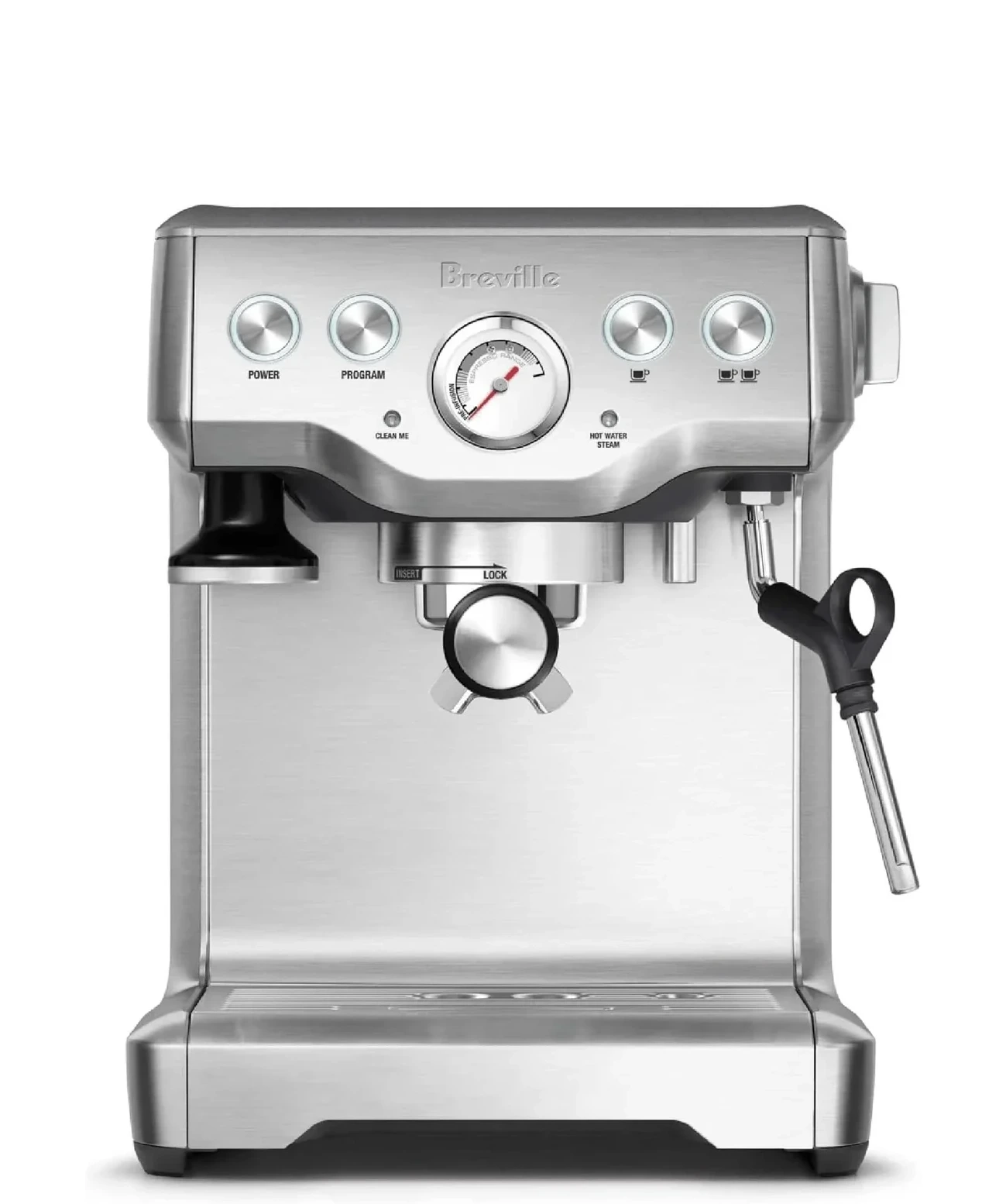
One step above the Bambinos was the Breville BES840, aka “Infuser.” This was descended from the venerable BES820/BES830 line and had much better steam wand mobility than the Bambino - I could move it left and right instead of just forward and back, so I could hold it over the trash can off to the side of the counter. This was the least expensive Breville model to feature a pressure gauge, which would help me as a novice determine if my shot was derailing catastrophically or at least vaguely over the target.
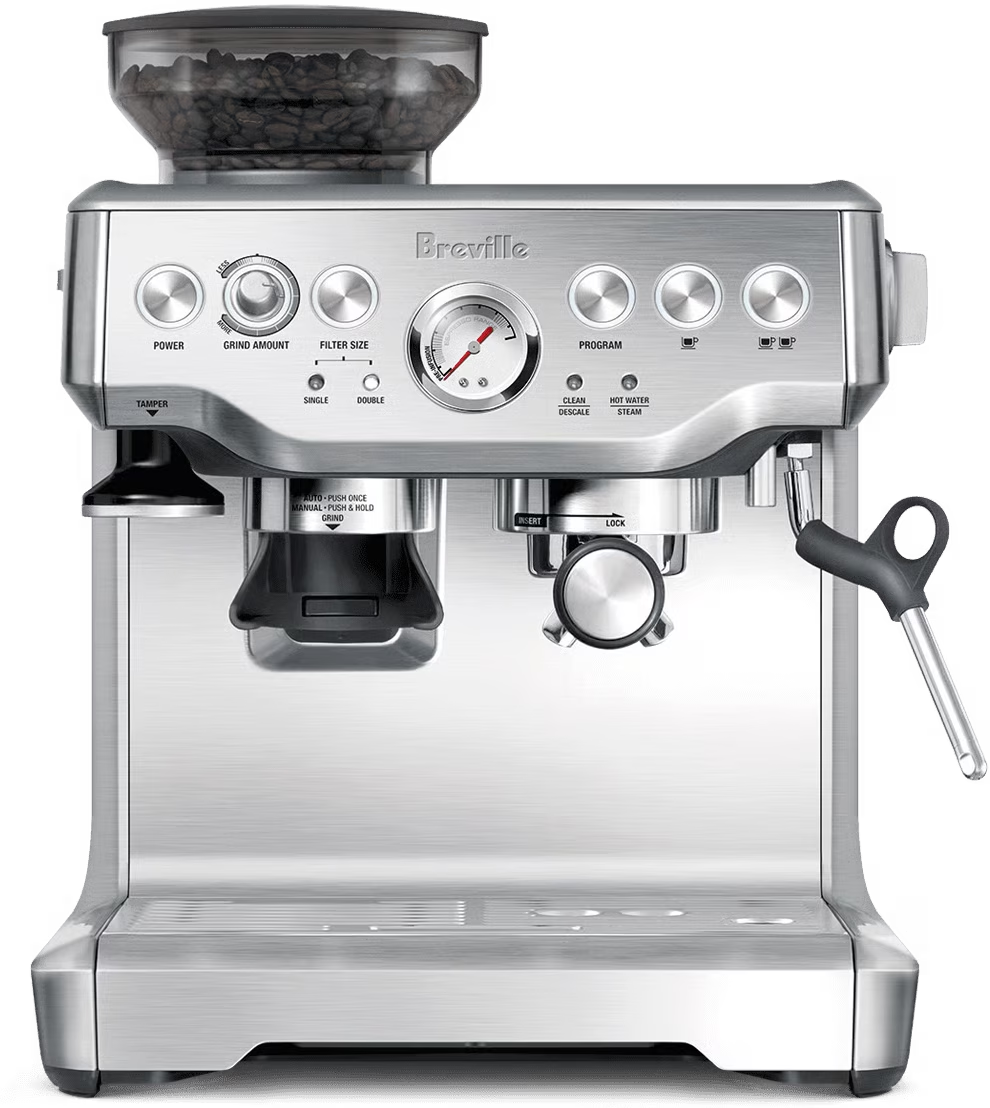
The model up from the Infuser, the Breville Barista Express, is often labeled the best-selling espresso machine in the world - but it had the deeply unwanted grinder.
If I did start wanting to tinker, the Infuser had a few, limited customization options - the pull time could be manually overridden, and the temperature was also adjustable within a few Celsius. But if I didn’t, it was likely to work reliably on the default settings.
The Infuser was smaller (10.12”D × 12.28”W × 13.15”H) than most of the more expensive models while simultaneously existing at the upper size limit of what I was willing to tolerate for an entry-level espresso machine. Basically, it was in the Goldilocks zone: not too big, not too small, not too cheap, not too expensive.
So, I got the Infuser.
Of Beans and Baskets
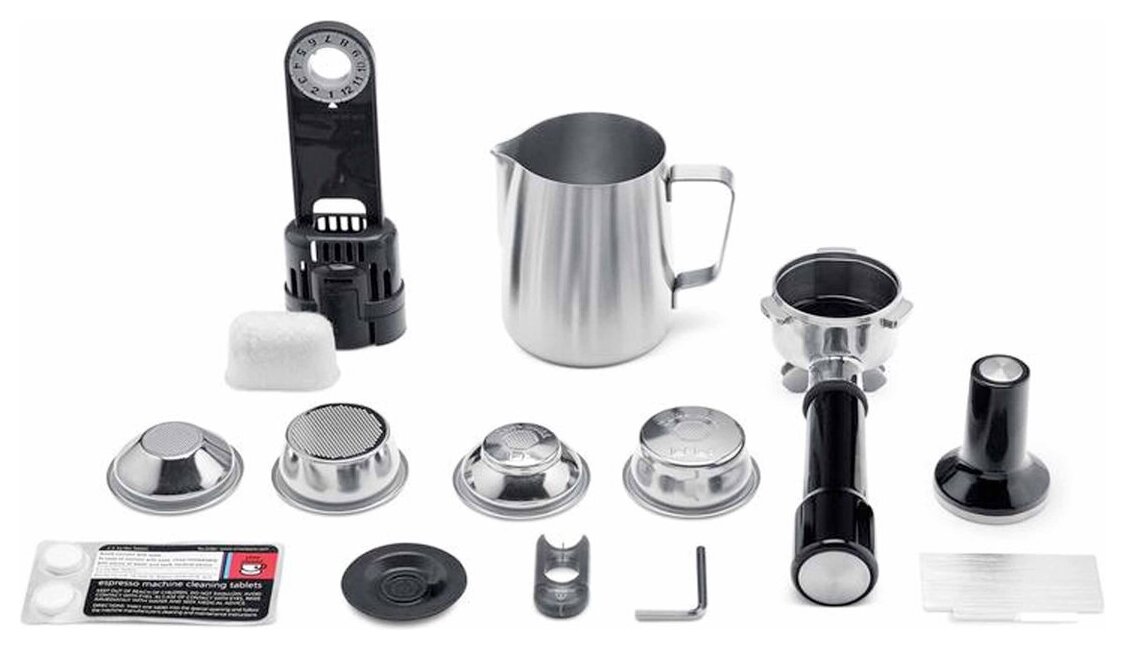
To prepare a shot, coffee grounds are loaded into a basket and firmly tamped flat, forming a “coffee puck.” The Breville came with four baskets in two sizes: a single shot and a double shot, and each of these had a “pressurized” and a “non-pressurized” version. The pressurized baskets use an extra wall to create resistance that makes flow much less sensitive to puck quality, which can heavily vary based on tamping technique, bean quality, and grind sizing. You could be wildly wrong about all of them and still get something vaguely drinkable. The tradeoff was that the quality and tastiness ceiling was much lower to the point even someone like me could notice it. The non-pressurized baskets required more attention, but produced a better shot when you got it right. But when you got it wrong, you’d often wind up with something closer to tasteless hot brown water, so the floor was much lower as well. 99% of the time I would use the double shot non-pressurized basket. The other baskets were doomed to live in the internal storage drawer, never to see sunlight.
For my espresso to come out right, I couldn’t grab a random pre-ground coffee from the store, as I was previously accustomed to doing. An espresso shot requires coffee beans that have been ground to a very fine particle size, and then “dialed in” through trial and error based on brand and time-since-roasted.
The grind size controls the flow rate during extraction: if the grind is too coarse, the water flows through the puck too quickly and the espresso becomes weak and under-extracted; if the grind is too fine, the water takes too long to pass through the puck and the espresso will be bitter and over-extracted. Furthermore, the beans need to be reasonably fresh and ground only shortly before brewing. As roasted coffee ages it gradually loses trapped CO₂, and grinding accelerates that process enormously. Very stale grounds offer less resistance to the water, producing faster flow and the aforementioned under-extraction issues.
Selecting a Grinder
I didn’t have a grinder - not even a spice grinder, which could be used for drip coffee in an emergency.
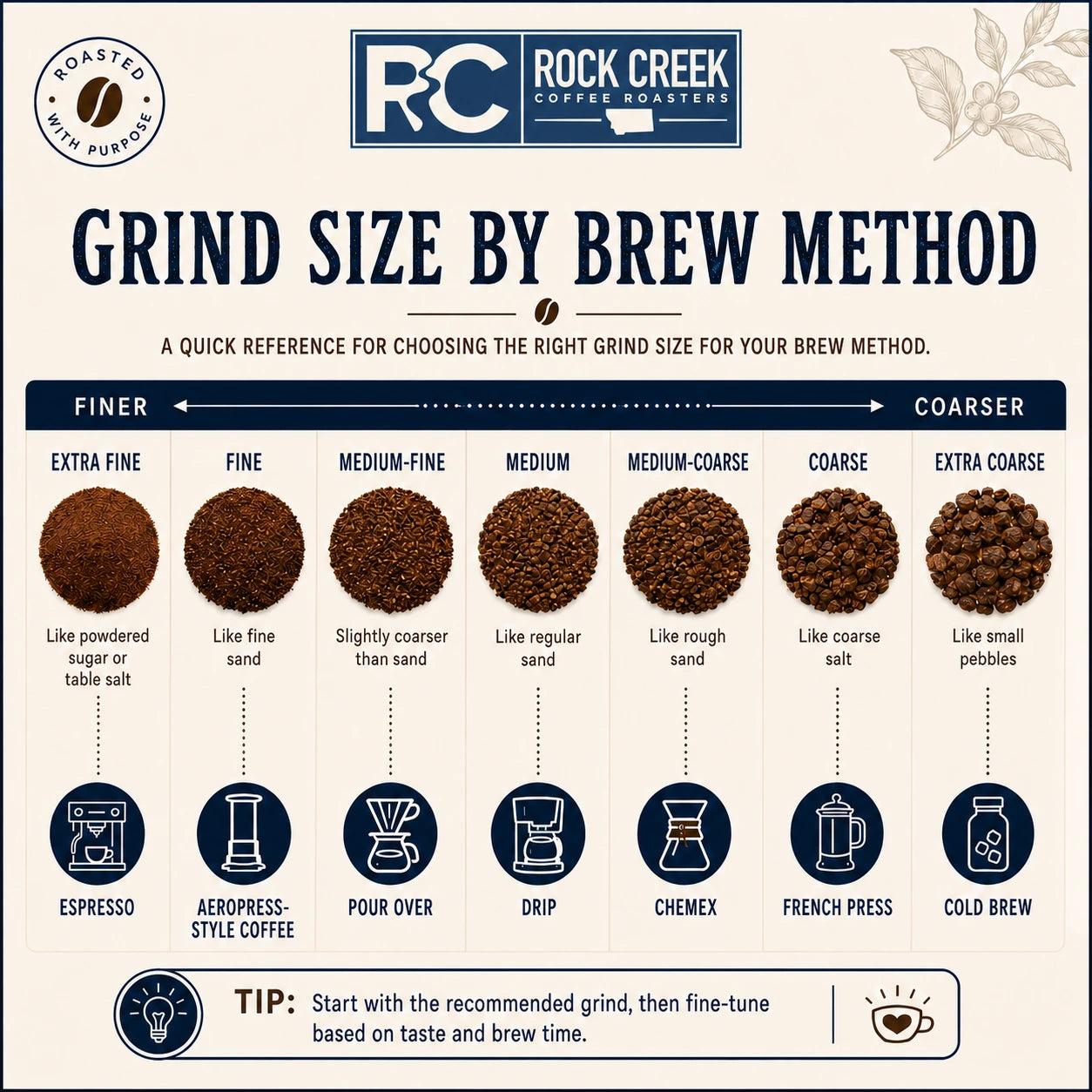
Here too, there was a lot of complexity based on what sort of coffee you were attempting to produce. Cold brew, drip coffee, and pourover (the only other coffee-forms I had to date attempted) generally used substantially coarser grounds than espresso, which required a very fine grind. However, there was a tendency for machines to cover only one half of the full coffee range. This was especially the case with espresso grinders, whose marketing revolved around producing exquisitely calibrated teeny tiny espresso grounds with extremely small step sizes. It turns out that once you have a basically competent brewing device, the grinder becomes the dominant determinant of shot quality, and there was quite a great deal of enthusiastic debate about the merits of this vs that grinder. Much like with camera bodies and lenses, the base machine was often overshadowed in both discussion output and resource expenditure by the more interchangeable piece. It was not unusual to spend $450 on a Gaggia and $1000+ on a single grinder…or sometimes, two.
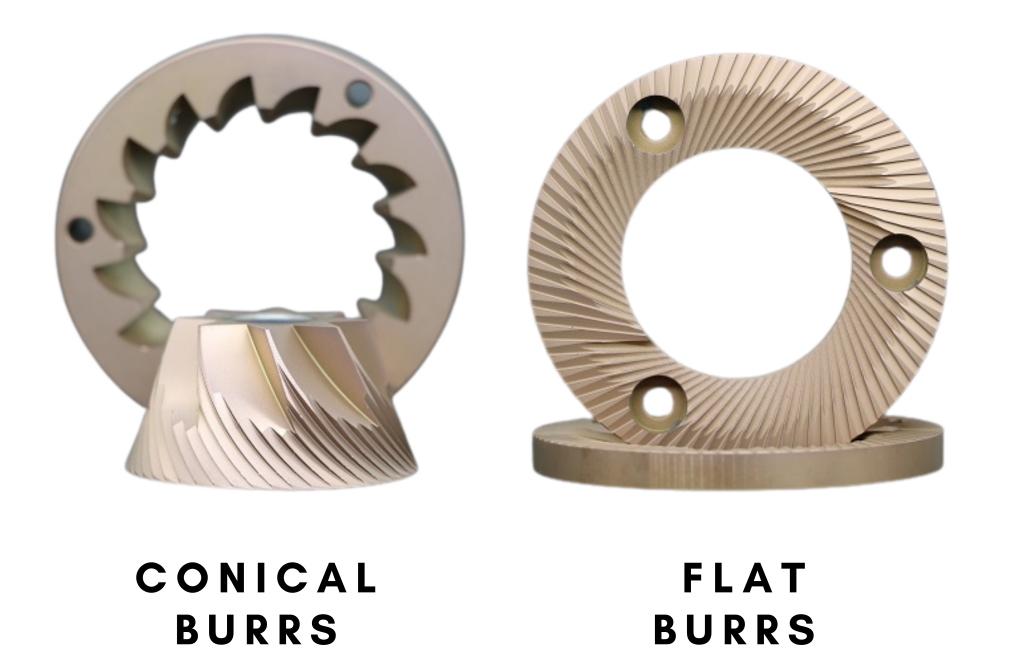
There were two common burr geometries: flat and conical. Supposedly, flat burrs were favorable for lighter roasts and higher-clarity cups, while conical burrs were preferable for medium/dark roasts and heavier-bodied espresso…but I was not confident in my ability to detect such subtleties. So, for me, the main decision was between a manual grinder and an electric one.
Analog Grinders (Fission Mailed)
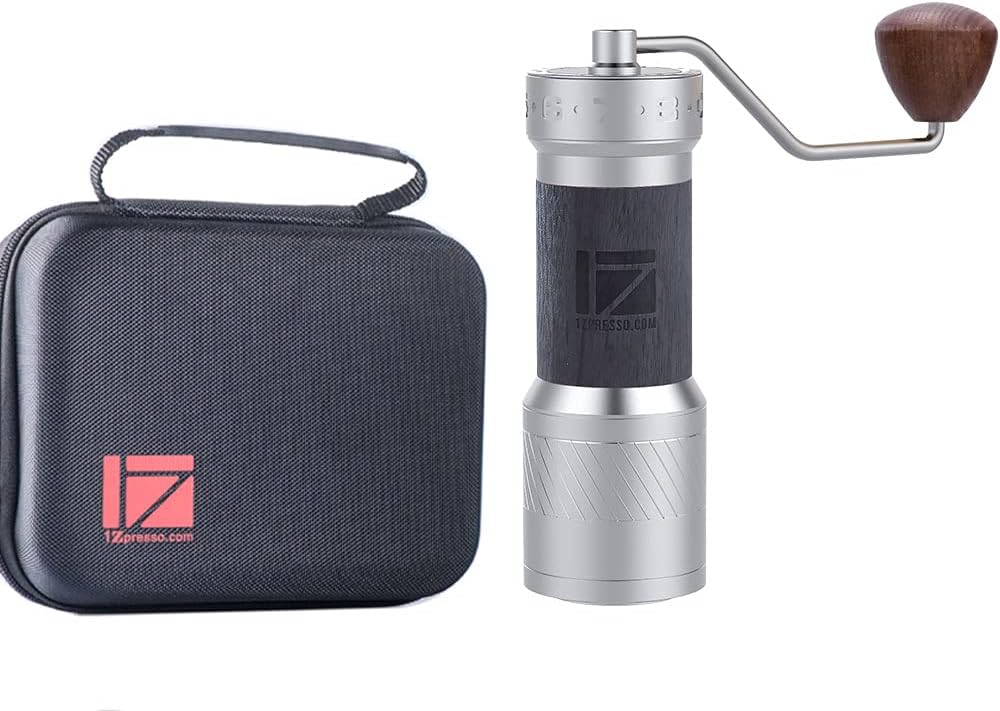
At first I tried a manual espresso grinder: 1Zpresso’s K-Plus Silver. This was an all-purpose grinder that can go from drip to espresso and would have saved considerable counterspace except for the fact that it was a nightmare to use. I immediately realized that manual grinding was really not for me. Maybe my femoid carapace simply lacked sufficient torque, but I found it way too effort intensive. I didn’t want a hobby before I was awake and I wanted a workout even less. That said, it was a very finely machined piece of work. I was almost sorry to send it back.
“While using with lightly roasted beans and for espresso levels of fineness, I definitely caused some muscle soreness in weird places only after using 2-3 times a day, but after a week of use I didn’t notice it any more. If you view this optimistically as a chance for a muscle toning exercise, then you will like hand grinding. If you see it as a drag it’s definitely possible this method may not be for you.” - Internet Reviewer
Time to try the electric option.
Electric Grinders
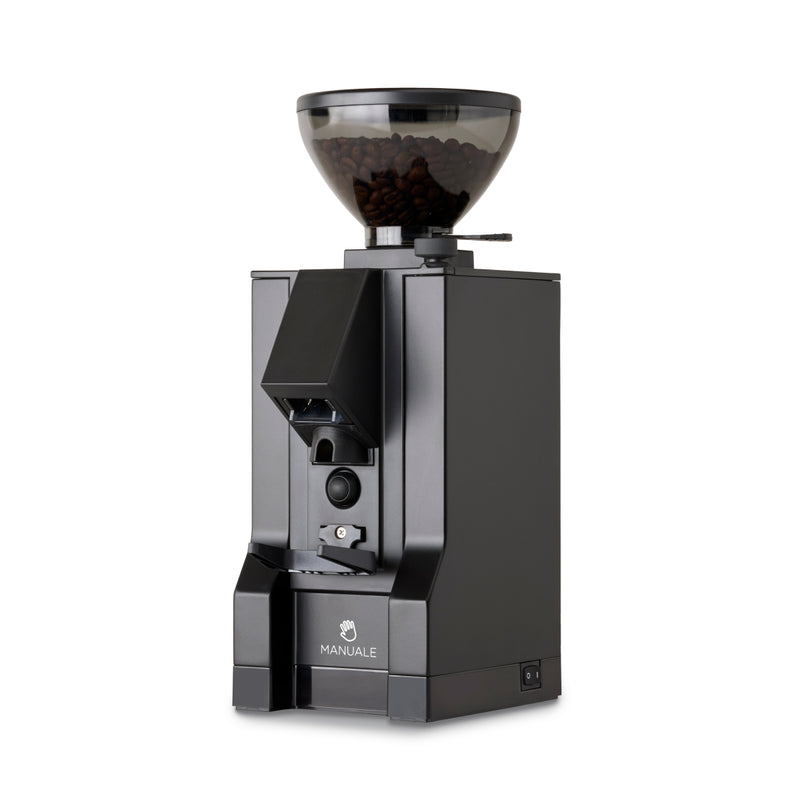
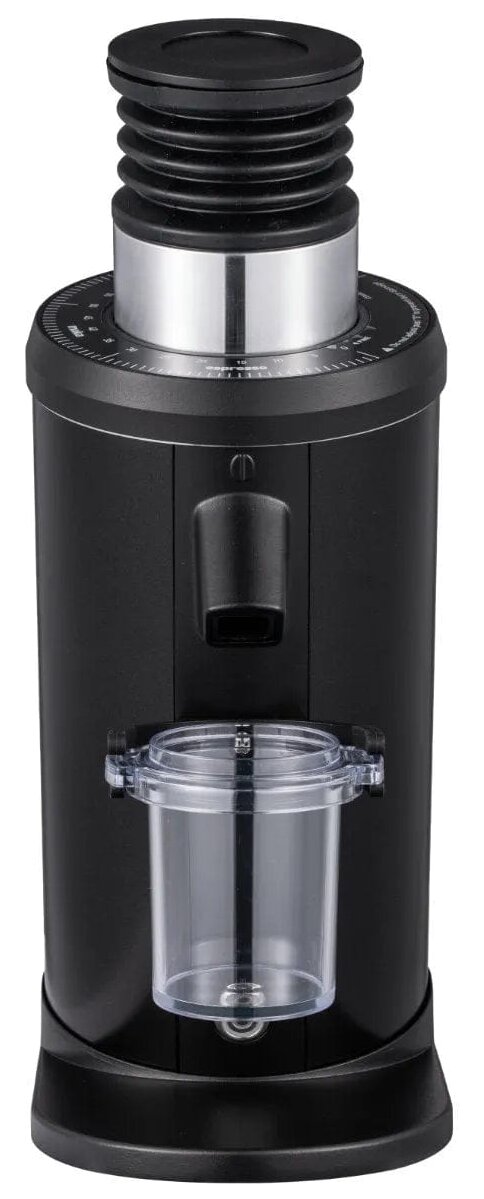
Some popular “coffee people” electric grinders were the Eureka Mignon Notte/Manuale ($330) and the DF64 ($400).
The main problem with the more espresso-specialized grinders was that many were fiddly enough that, once dialed in, you tended to want to leave them there. Some of them theoretically could do coarser grounds, but the hassle of changing between ranges often rivaled that of swapping modes on a paired coverstitch/serger machine. If you wanted to make drip coffee or pourover (as I sometimes still did), there was a general expectation in these spaces that you should just get two separate grinders.
But I did not want a grinder that was excellent at espresso and annoying at everything else. My ideal grinder would cover the full spectrum of grind sizes with moderate competence and minimum hassle. That way I could maintain a single stock of whole beans and avoid maintaining a second coffee tech stack. One dedicated grinder already took up a lot of space as it was; if it was imperfect in some way, I could live with that until I became savvy enough to notice its deficiencies.
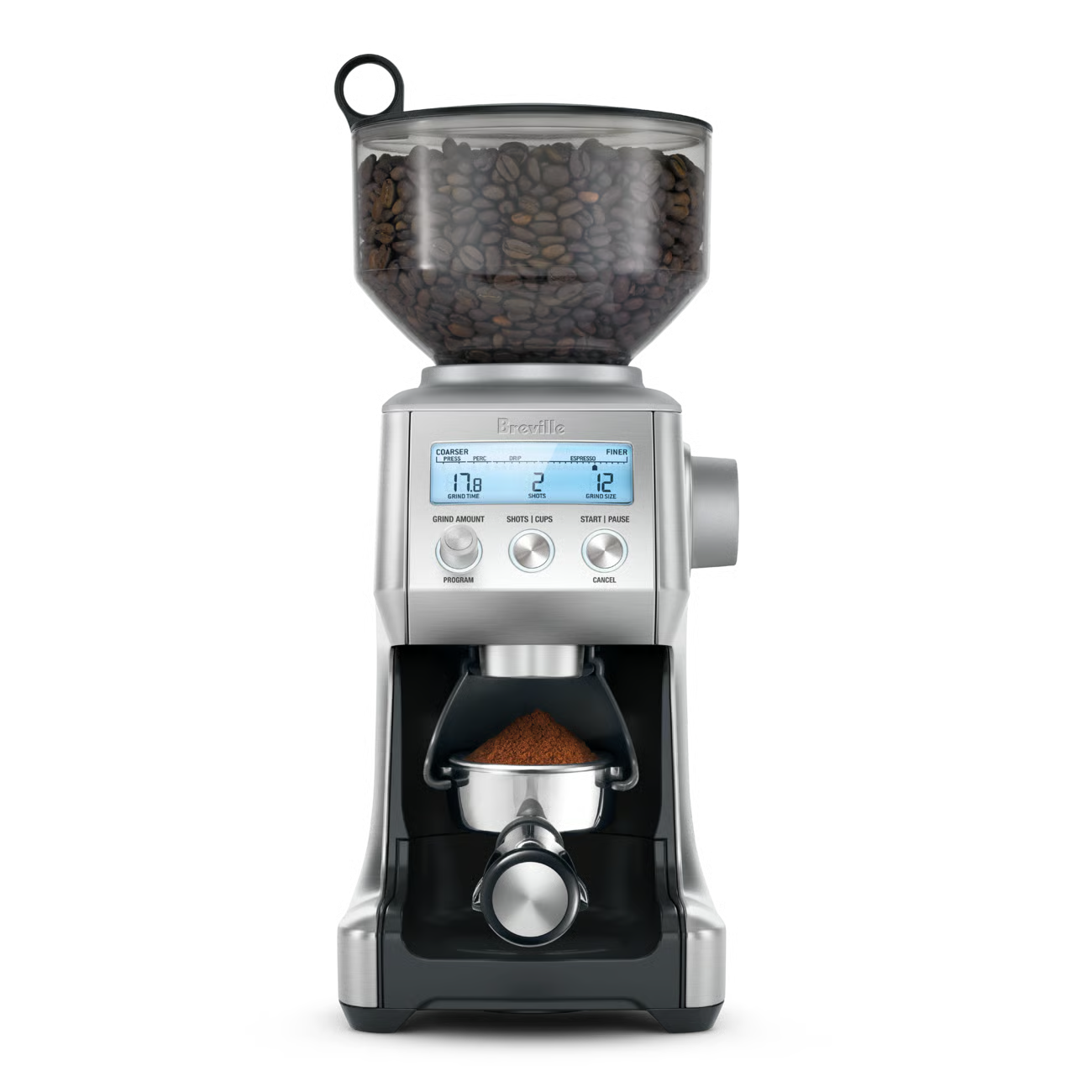
Here there was an obvious default candidate for a compact generalist: the $200 BCG820 Breville Smart Grinder Pro. Weighing in at 8.5”W × 6.3”D × 15.3”H, it was (relatively) compact compared to the typical enthusiast-class offerings and it could do the full spectrum of grind sizes, although its espresso range lacked the granular control of a dedicated espresso specialist. And ok…yes…it is shallow, but…Breville absolutely knew what they were doing with the stainless-steel housing. It looks beautiful and matches the espresso machine. In a surprising twist, contra the espresso machine situation, basic maintenance on the SGP was actually easier than many of the enthusiast-class machines. The UI is excellent and training others on it has been relatively painless. It’s also one of the few grinders you can find on display or buy in person. I personally picked one up for a decent price from Sur La Table in Pike Place.
It’s quite a bit better than the awful older grinders built into the larger Breville machines, and more modular to replace if it does go extinct (at which point you can consider a different grinder too…75% of espresso is in the grinding at the highest levels…or so they say). If you absolutely can’t have a single old bean fragment in your espresso, this machine is not for you, because it tends to retain maybe 1-2g of grounds from the previous run. But for me, this was a non-issue.
I’d seen some faff online about the plastic impeller used to expel the grounds eventually wearing out and jamming the grinder, but this turned out to apply mainly to the older BCG800. Breville had quietly redesigned the impeller with a metal jacket in the BCG820 Smart Grinder Pro to stealth-patch the failure mode.
I didn’t see any dealbreaking design issues, mostly complaints that the grounds were “clump city” and caused too much channelling because they “weren’t fluffy enough.” That said, I’m a big fan of the Harbor Freight method of tool improvement: use a cheaper piece of gear until it breaks or aggravates, and only then upgrade. Giving Breville the Harbor Freight treatment is kind of ironic since Breville’s brand positioning is clearly something more like “Apple, but for kitchen appliances.” In any case, we’ll see how much mileage I can get out of the pair.
Machine Maintenance
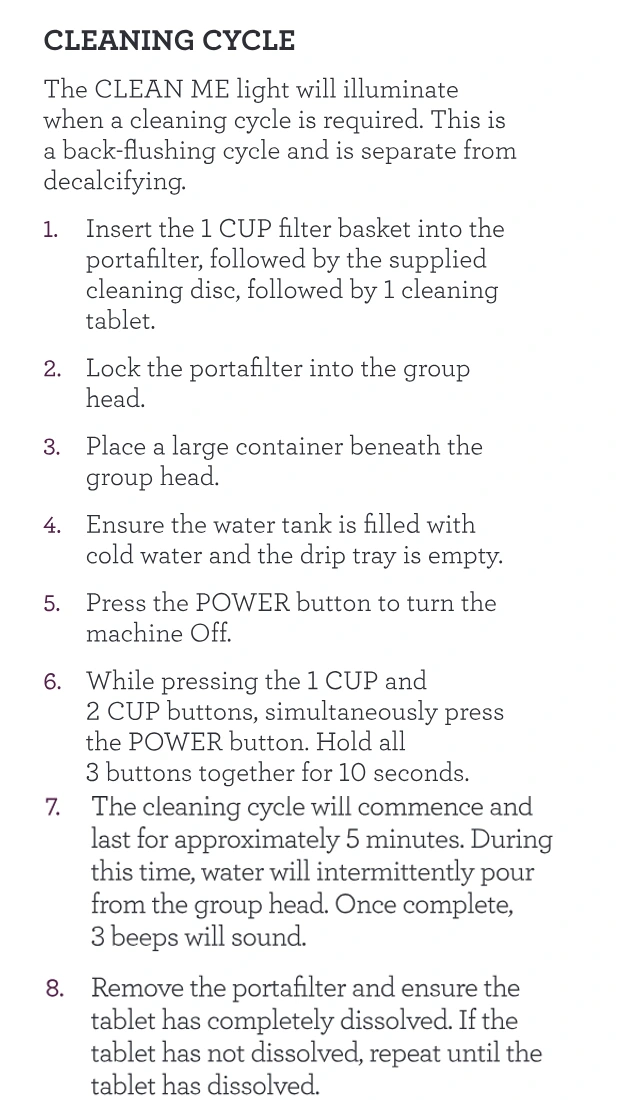
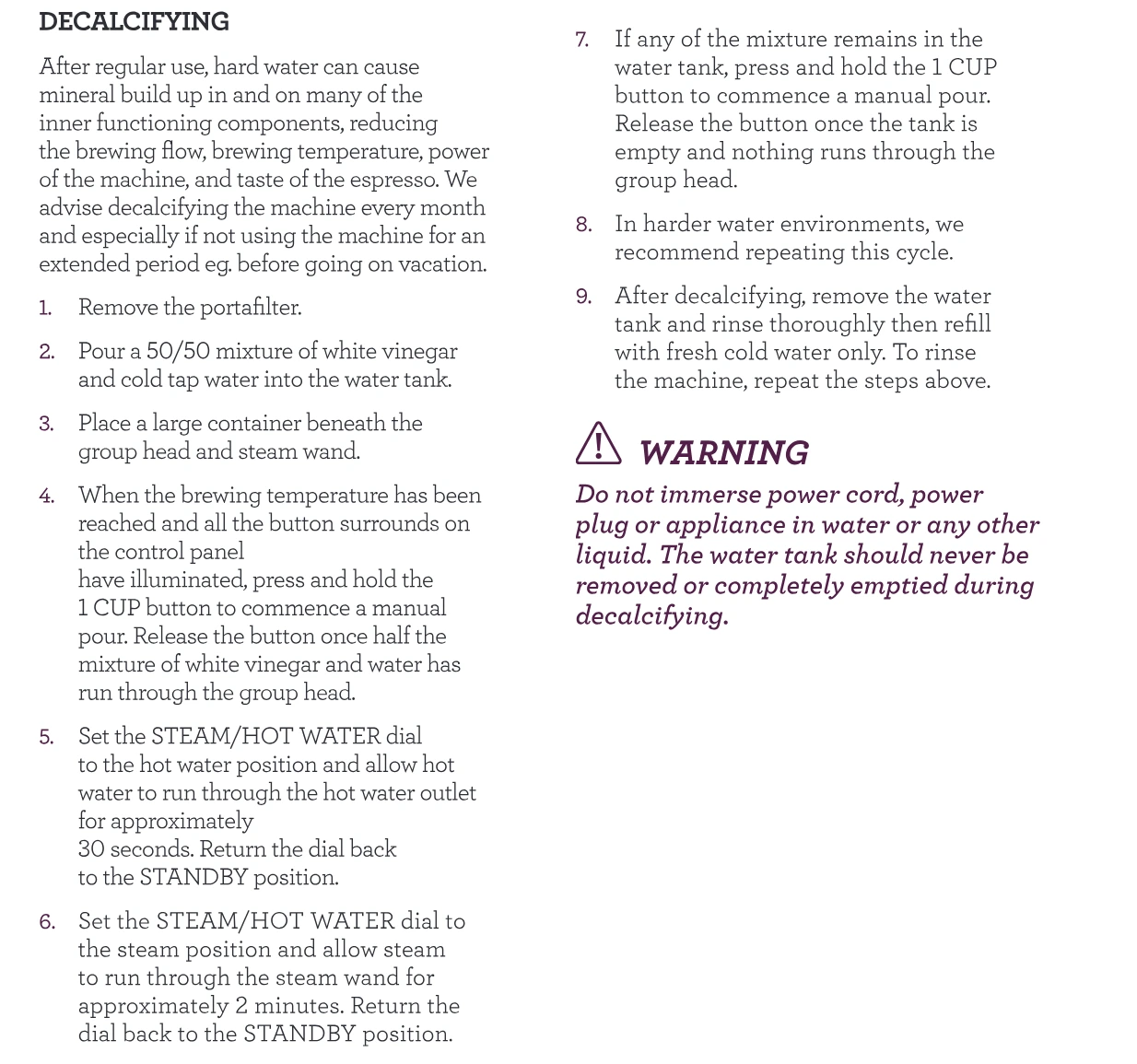
After a while, the Breville will automatically begin blinking at you to demand “CLEAN ME.” To appease the machine, you will need to perform one of two cleaning rituals: a “backflush” if the light is flashing, or a “descaling” if the light is solid. The backflush is essentially gargling and the descaling is something closer to a colon cleanse; the former cleans coffee oils and other residue from the “mouth” (grouphead/brew path) of the machine, while the latter removes buildup from the internal plumbing by flushing them with a descaling solution poured into the rear water reservoir. The cleaning alarm itself appears to be based on the number of shots pulled rather than by any internally sensored state of the system. Breville documents a 200-extraction cleaning interval on the Bambino Plus and Dual Boiler, although the Infuser manual itself weirdly omits the threshold.
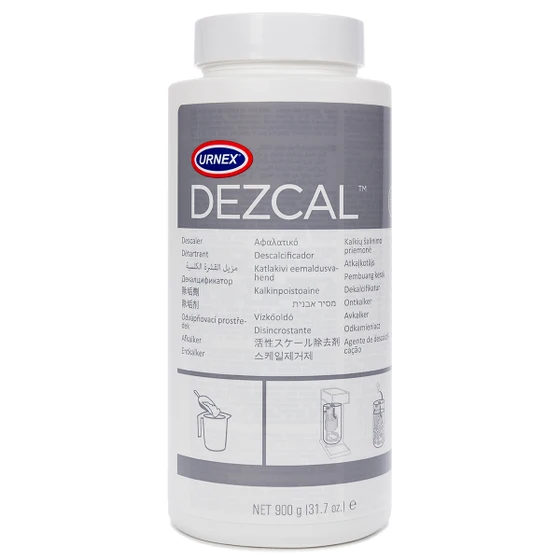
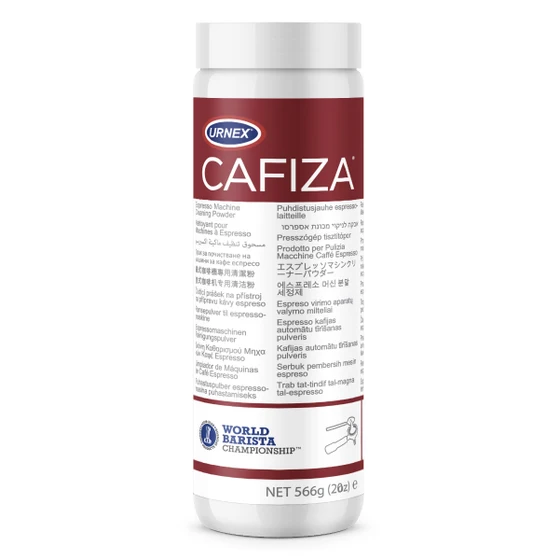
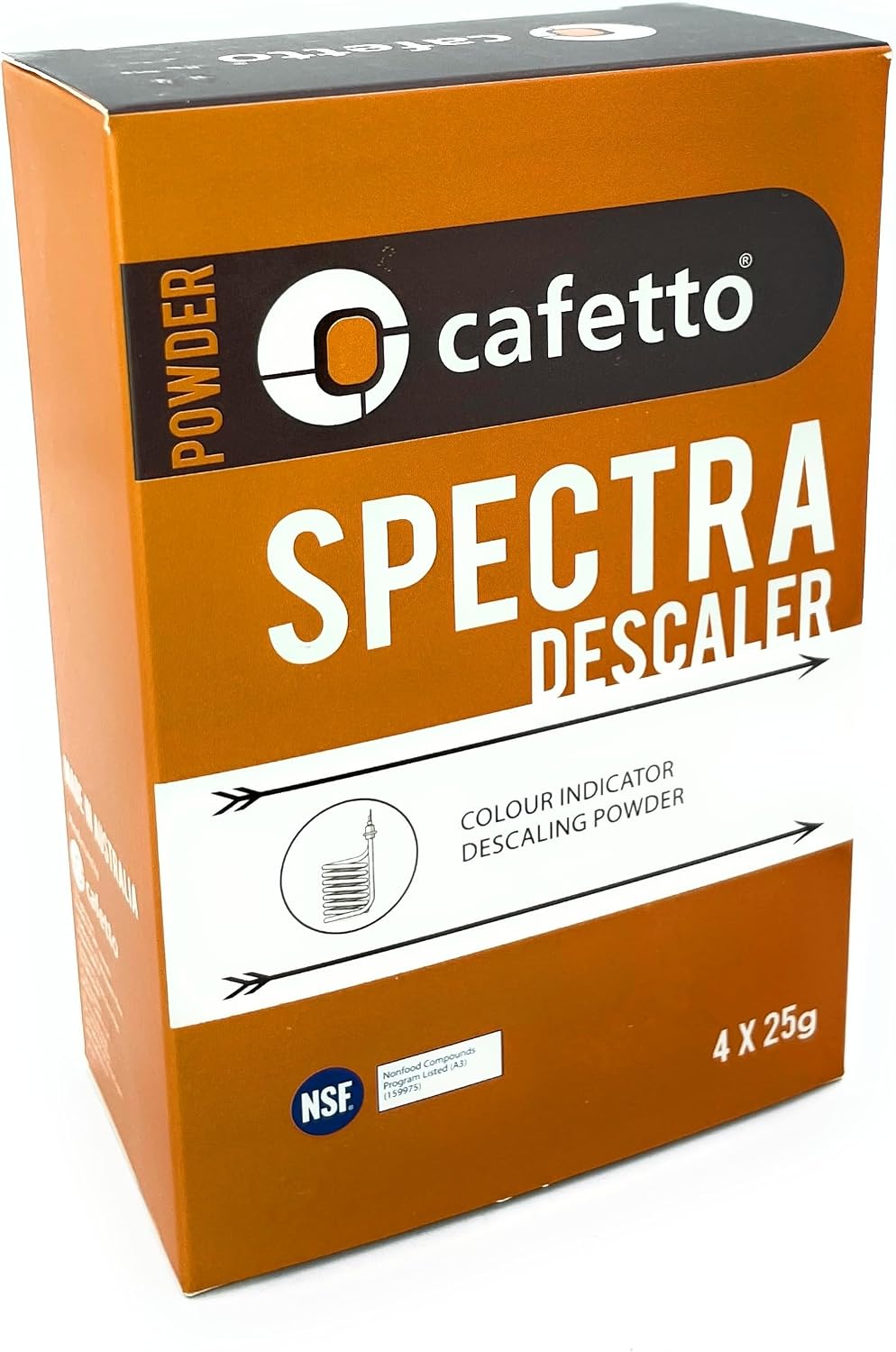
A new Breville includes small samples of cleaning supplies, but you’ll run out pretty quick, and the Breville-branded refills are extremely costly. Urnex Dezcal (for descaling) and Urnex Cafiza (for backflushing) are industry standard for these purposes, and you can get essentially a lifetime supply for the price of 1 year’s worth of Breville refills. Descaling with vinegar is a common ultra-budget suggestion, but many people complained that the vinegar polluted their coffee and made it reek of salad dressing for an intolerable amount of time thereafter. Citric-acid based cleaners (such as Dezcal) seemed much more effective and not especially expensive in any case. Finally, I stumbled across Cafetto Spectra, a descaler whose color changed along with pH to tell you whether the machine needed another round of descaling. I decided to get some to hoard in case I ever needed debug output on the state of the pipes.
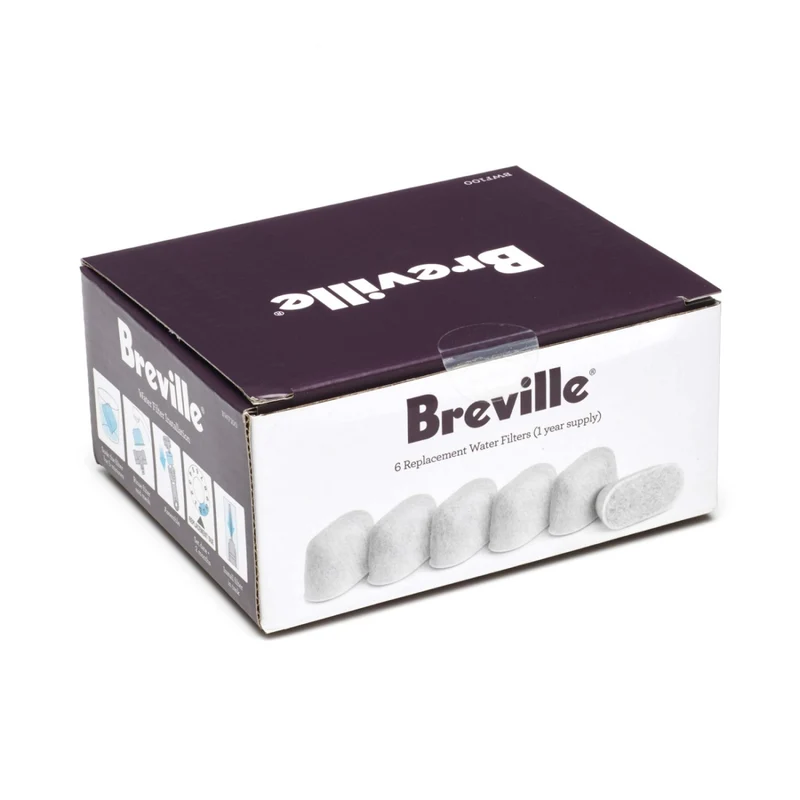
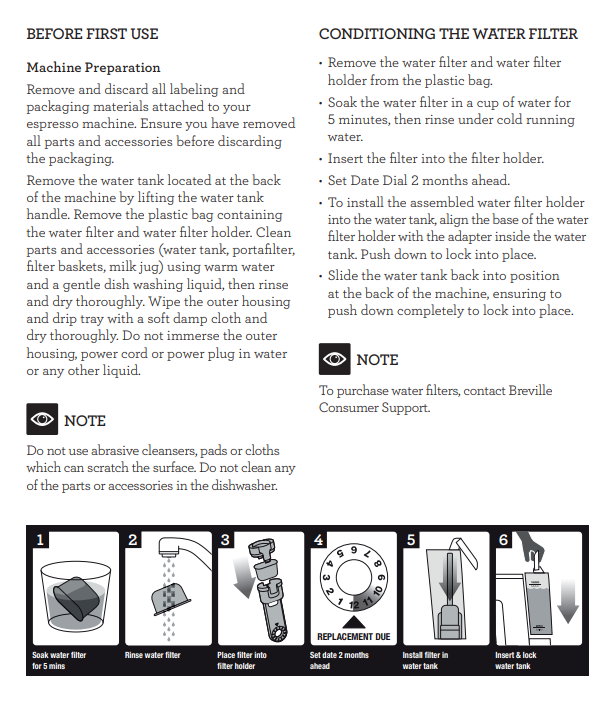
For the filters, I gave up trying to figure out if the aftermarket ones are full of carcinogens and just bought the branded ones, but I change them maybe twice a year. It helps with water hardness, but Seattle’s isn’t particularly bad, so mine primarily exists to plug the slot and keep errant dust particles from getting sucked into the machine internals.
Epilogue
2023 Update: I have been very happy with my Breville Infuser. The dial became difficult to turn with time, however, necessitating a handle upgrade. Aside from that, the only thing I wish it had was some sort of low water sensor system built in. (Sometimes one of us uses up the last of the water and then the next doesn’t notice before making their own coffee, necessitating a mid-pull dash for the water pitcher…)
2026 Update: The Breville pair has continued to Just Work for my daily coffee needs. I remain insufficiently espresso-enlightened to detect whatever flavor crimes the setup might be committing, but it has been reliable and low-drama. Regretfully, in what some are calling a “true espresso tragedy”, the machine has been discontinued. However, despite having disappeared from Breville’s own site, it continues to remain mysteriously available on Amazon. The price has been spotted dropping to as low as $350–400, which is quite the steal.
Product Links
- Breville BES840 Infuser Espresso Machine
- Breville Infuser (BES840) Instruction Manual
- Breville BES840XL Infuser Service Manual (PDF)
- Urnex Cafiza Espresso Machine Cleaning Powder (566 grams) (for gargling)
- Urnex Liquid Dezcal Activated Descaling Solution (33.6Oz) (for the colon cleanse)
- Spectra Espresso Machine Color Indicating Descaling Cleaning Powder (4 Single Use Packets) (for the
console.log()) - Breville Resin Water Filters #BWF100 (“replace the filter every two months”…)
- Breville BES840 Infuser Parts
Other Reading
- https://coffeegeek.com/blog/new-products/the-breville-infuser-the-insider-secret-espresso-machine/
- https://coffeegeek.com/reviews/fullreview/breville-smart-grinder-pro-full-review/
- https://www.bonappetit.com/story/which-breville-espresso-machine-is-right-for-you (“as a longtime driver of Toyotas, I think of [the Infuser] as the Corolla of the Breville lineup”)
- https://www.reddit.com/r/espresso/comments/1dq217e/breville_infuser_no_longer_listed_on_official/
- https://www.reddit.com/r/Coffee/comments/125p07v/why_is_the_brevillesage_sgp_so_popular/
- https://www.seattlecoffeegear.com/pages/learn-articles
- https://www.home-barista.com/faqs-and-favorites-digest.html
Other Notes
- Brevilles are called “Sage” in the EU (for whatever reason)
- Brevilles use a 54mm portafilter vs a more typical 58mm for the enthusiast machines (the accessories for different size portafilters are not interchangeable)